跳到主要内容

What’s In DWR’s Back Yard?

By Leah Card/DWR

Do you know what wildlife species share your space? Staff of the Virginia Department of Wildlife Resources (DWR) set up a trail camera near the DWR Headquarters building in Henrico, Virginia, a suburb of Richmond. The resulting images revealed a whole host of wildlife living in the area. Humans and wildlife are increasingly existing in overlapping spaces, even in spaces you might not expect!

Trail cameras are a great way to observe wildlife continuously in a non-invasive manner. This camera, set along a wildlife trail in a small forest patch adjacent to the parking lot, photographed all animals that passed by from May to July 2025. The camera was part of the Virginia Gray Fox Project, research being done by DWR and Virginia Tech to ascertain the status of the gray fox (Urocyon cinereoargenteus) population that, anecdotally, appears to have decreased in the Old Dominion.

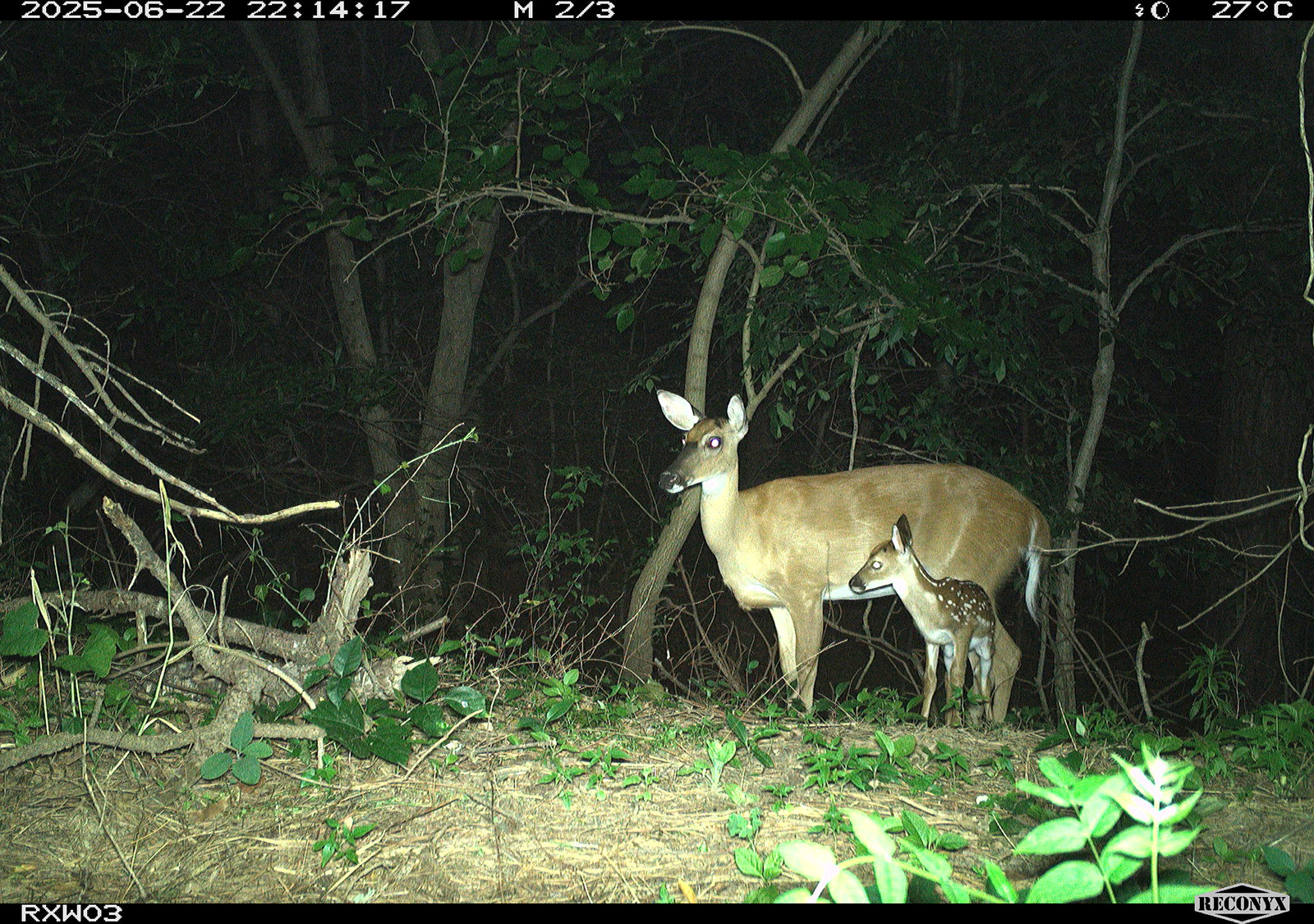
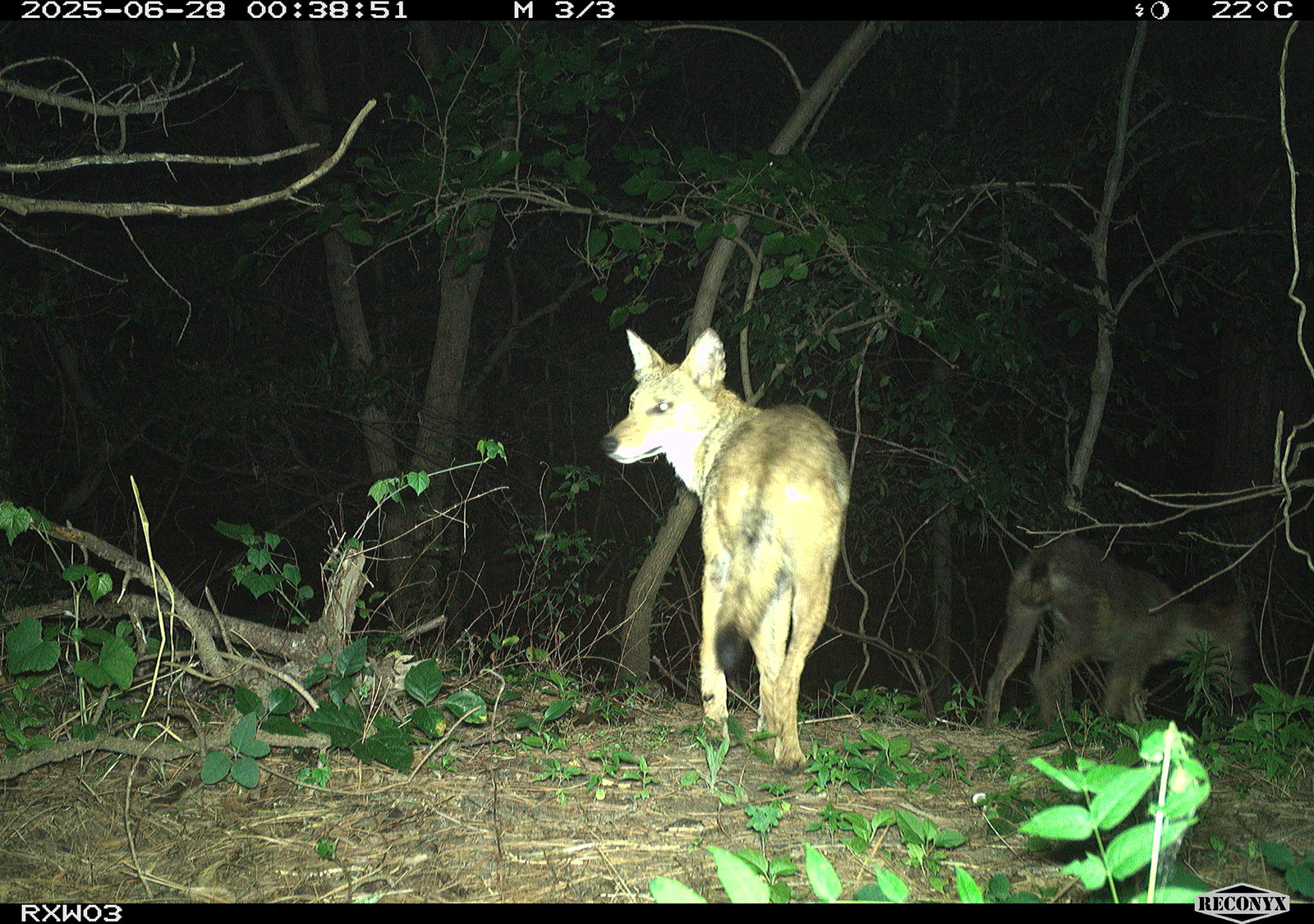
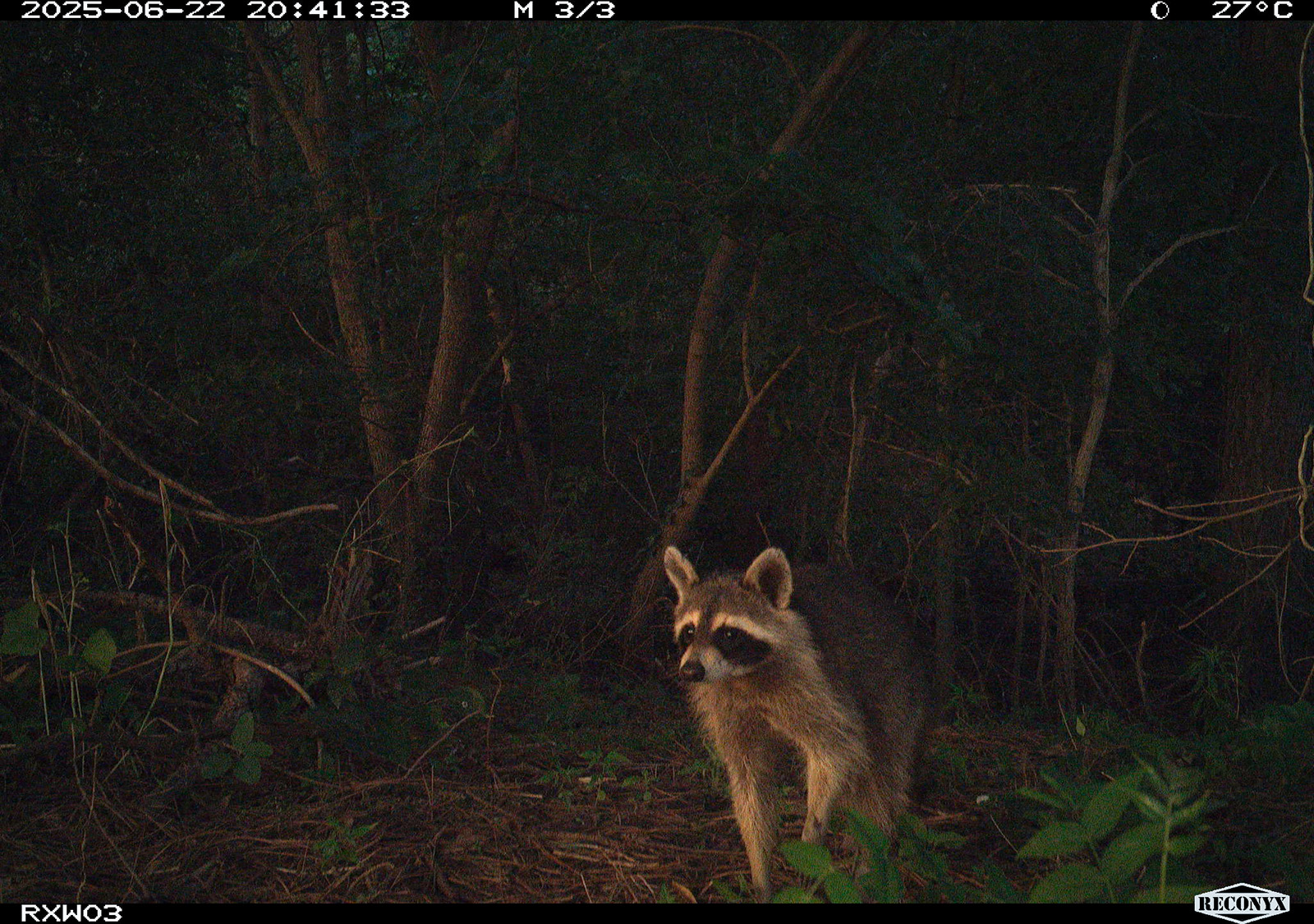
A trail camera photo of a whitetail deer doe with a fawn. A trail camera photo of a coyote. A trail camera photo of a raccoon.

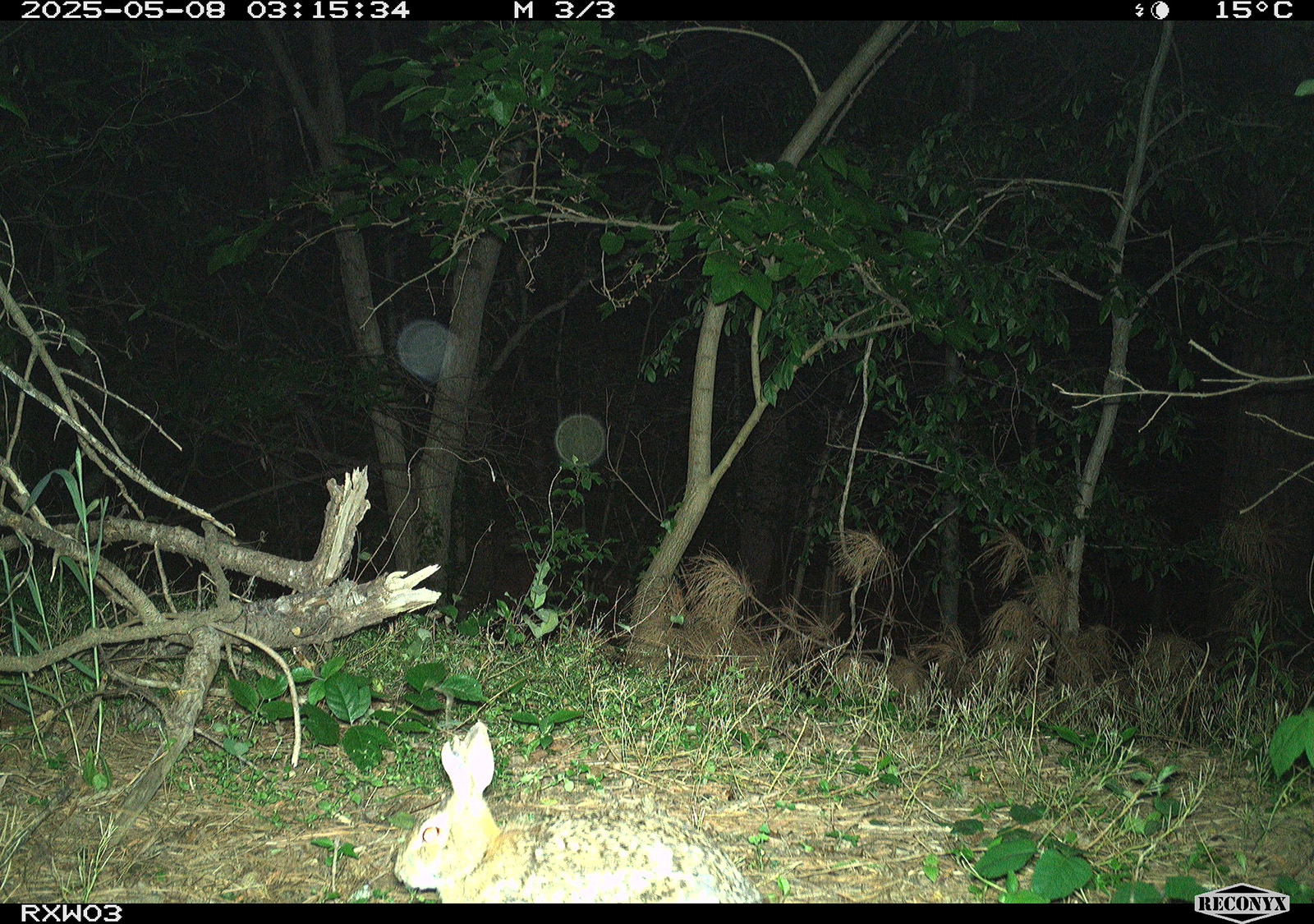
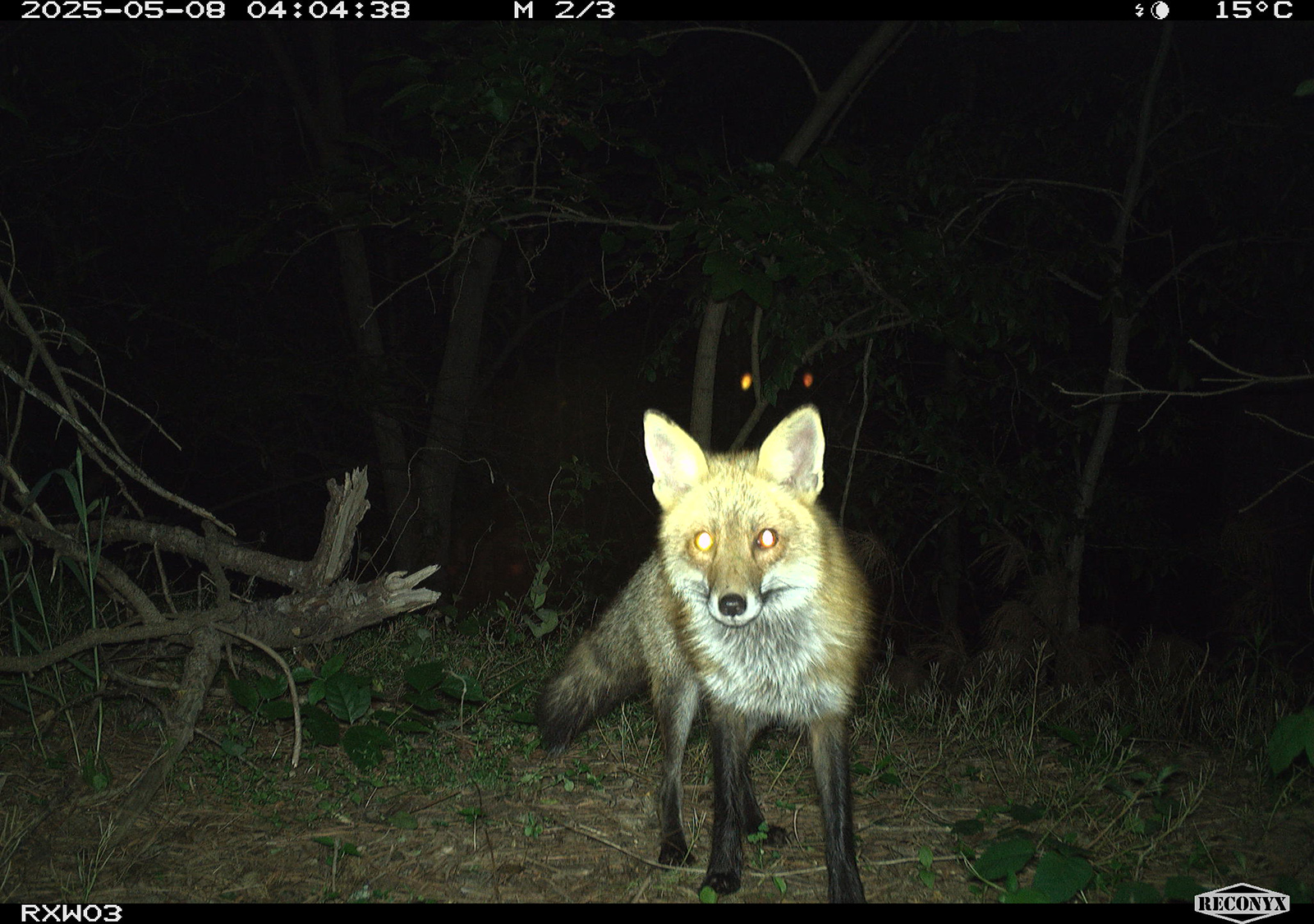
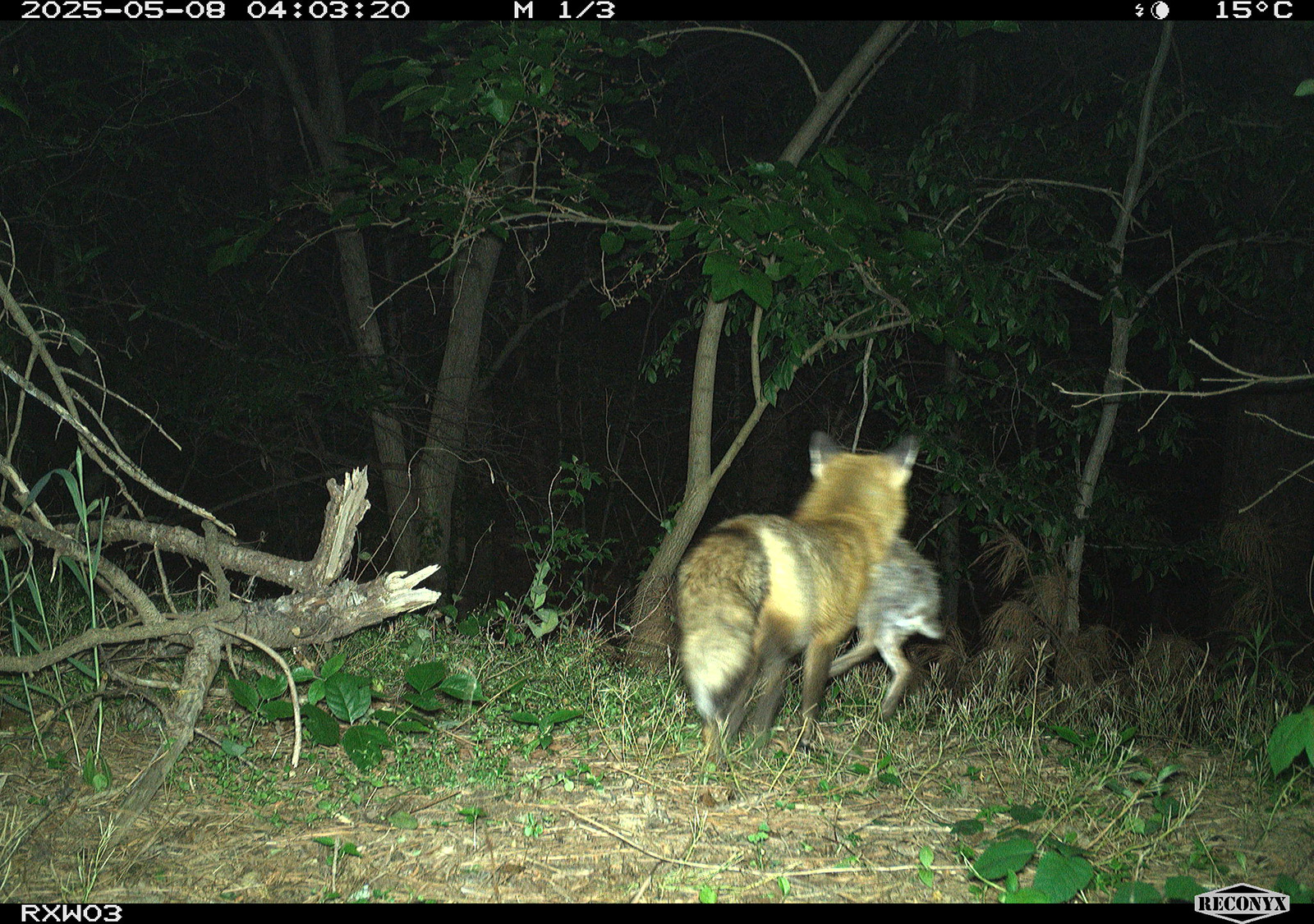
While no gray foxes were observed on DWR’s camera, as they tend to prefer more forested and less developed areas, numerous other wildlife species were observed by the camera, including red fox, coyote, opossum, deer, gray squirrels, raccoon, cottontail rabbits, and striped skunk. These species are generally abundant across Virginia and can be found in rural, suburban, and urban areas alike. Red foxes, coyotes, raccoons, skunks, and opossums are all opportunistic omnivores, allowing them to make use of various food resources and adapt to more urban environments.

A trail camera photo of an eastern cottontail rabbit. A trail camera photo of a red fox. A trail camera photo of a red fox trotting away with a cottontail rabbit in its mouth.

It can be quite common to see these and other wildlife species in your neighborhood. If you look and listen, you can discover a wide variety of wildlife species living nearby. Always be sure to observe wildlife from a distance and give them space. Simply seeing wildlife is not a cause for concern.

However, there are some things that you can do to help keep wildlife wild and prevent conflict. Wildlife can be attracted to homes and back yards if food is readily available. Do not feed wildlife, and be sure to remove any outdoor food sources, which can include securing trash and compost, not leaving pet food outside, and installing good fencing around gardens and chicken coops. Wildlife may also search for places to shelter or den near your home. To prevent this, you should close up all openings under and into your buildings, after ensuring that no animals are currently inside. This is best done in the late fall and winter months.

It is important that wildlife maintain their fear and not get habituated to areas frequently used by humans. If wildlife approach you or your pets, back away slowly, secure your pets, and scare off the animal by making noise and appearing large, for example by yelling and waving your arms. This hazing can help reestablish wildlife species’ natural fear of humans.

If you are experiencing an issue with wildlife, please dial our tollfree wildlife conflict helpline at 1-855-571-9003 or visit our website.


Leah Card is DWR’s Furbearer Project Leader.

Virginia野生动物杂志封面合集,用于推广Virginia野生动物杂志订阅
三月至四月2026弗吉尼亚野生动物杂志封面图片1 月至 2 月2026弗吉尼亚野生动物杂志封面图片11-12月2025弗吉尼亚野生动物杂志封面图片九月至十月2025弗吉尼亚野生动物杂志封面图片7 月至 8 月2025弗吉尼亚野生动物杂志封面图片5 月至 6 月2025弗吉尼亚野生动物杂志封面图片

本文最初发表于《弗吉尼亚野生动物杂志》。

欲获取更多信息丰富的文章和获奖图片,请立即订阅!

了解更多并订阅